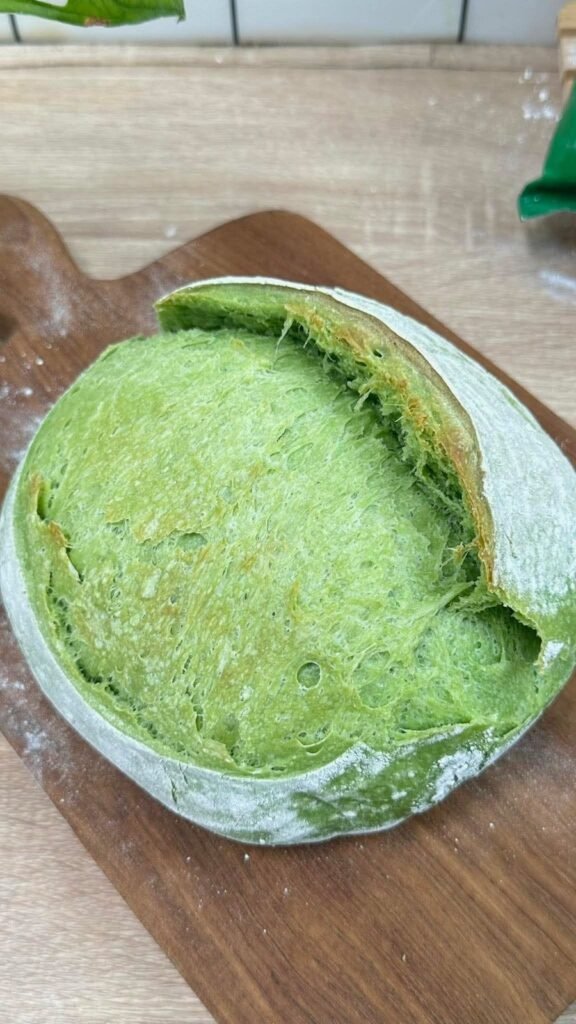

There’s something incredibly satisfying about baking fresh bread at home. The aroma that fills the kitchen, the golden crust, and the soft fluffy interior make homemade bread a comforting treat for any occasion. If you are looking for a bread recipe that is both eye-catching and delicious, this Soft & Fluffy Green Bread Loaf is the perfect choice.
With its vibrant green color, airy texture, and lightly crisp crust, this bread is guaranteed to stand out on your table. Whether you use matcha powder, pandan extract, spinach powder, or natural food coloring, the result is a beautiful loaf that looks impressive and tastes wonderful.
Unlike ordinary bread, this green loaf adds a fun and creative touch to your baking. It is soft enough for sandwiches, delicious when toasted, and perfect for serving with butter, jam, cream cheese, or honey. The recipe uses simple pantry ingredients and is easy enough for beginner bakers to master.
Why You’ll Love This Green Bread Loaf
This bread is more than just its beautiful appearance. It offers a wonderful texture and flavor that make it suitable for everyday baking.
Reasons to Make This Recipe
- Soft and fluffy interior
- Beautiful vibrant green color
- Easy-to-follow recipe
- Perfect for beginners
- Great for breakfast and snacks
- Bakery-style appearance
- Versatile serving options
- Freezer-friendly
- Uses simple ingredients
- Ideal for special occasions and food photography
Whether you’re baking for family, guests, or your food blog, this loaf is guaranteed to attract attention.
What Makes Bread Green?
The green color can come from several natural ingredients.
Popular Options Include:
- Matcha powder
- Pandan extract
- Spinach powder
- Green tea powder
- Natural green food coloring
Matcha and pandan are the most common choices because they provide both color and flavor.
Matcha gives the bread a subtle earthy taste, while pandan creates a sweet and fragrant aroma that is popular in many Asian desserts.
Ingredients
For one large loaf:
- 4 cups bread flour
- 2¼ teaspoons instant yeast
- 2 tablespoons sugar
- 1 teaspoon salt
- 1 cup warm milk
- ¼ cup warm water
- 2 tablespoons vegetable oil
- 1 tablespoon matcha powder or pandan powder
- 1 teaspoon vanilla extract (optional)
For Dusting
- Extra flour
Kitchen Equipment Needed
- Large mixing bowl
- Measuring cups and spoons
- Dough scraper
- Kitchen towel
- Loaf pan or baking tray
- Cooling rack
Step 1: Activate the Yeast
In a large mixing bowl, combine the warm water, warm milk, sugar, and yeast.
Allow the mixture to sit for about 5 to 10 minutes.
Soon, you should notice a layer of foam forming on the surface.
This foamy layer indicates that the yeast is active and ready to help the bread rise properly.
If no foam appears, your yeast may be expired or the liquid may have been too hot.
Step 2: Prepare the Green Dough
Add the vegetable oil and matcha powder to the yeast mixture.
Whisk thoroughly until the green color is evenly distributed throughout the liquid.
If using pandan extract instead of powder, mix it in at this stage.
Gradually add the bread flour and salt.
Mix until a rough dough begins to form.
Transfer the dough onto a lightly floured work surface.
Step 3: Knead the Dough
Kneading develops the gluten structure that gives bread its soft and chewy texture.
Knead the dough for approximately 8 to 10 minutes.
Continue until the dough becomes:
- Smooth
- Elastic
- Soft
- Slightly tacky
Avoid adding excessive flour during kneading, as this can make the bread dense and dry.
A slightly sticky dough usually produces a softer loaf.
Step 4: First Rise
Place the kneaded dough into a lightly greased bowl.
Cover with a clean kitchen towel or plastic wrap.
Allow it to rise in a warm place for 1 to 1½ hours.
During this time, the dough should double in size.
This first rise is crucial because it creates the air pockets responsible for the bread’s fluffy texture.
Step 5: Shape the Loaf
Once the dough has doubled, gently punch it down.
This releases excess gas while preserving the structure of the dough.
Shape it into your desired form.
Options include:
- Traditional loaf shape
- Round artisan loaf
- Oval rustic loaf
Place the shaped dough into a greased loaf pan or onto a parchment-lined baking sheet.
Dust the top lightly with flour.
This simple step gives the bread a beautiful artisan-style appearance.
Step 6: Second Rise
Cover the shaped loaf once again.
Allow it to rise for 30 to 45 minutes.
This second proofing period helps the bread become lighter and creates better oven spring during baking.
You’ll notice the dough becoming puffier and softer.
Do not skip this step if you want an airy crumb.
Step 7: Bake the Bread
Preheat your oven to 375°F (190°C).
Place the loaf in the center rack.
Bake for approximately 30 to 35 minutes.
As the bread bakes, the kitchen will fill with an irresistible aroma.
The loaf should develop a lightly golden crust while maintaining its vibrant green interior.
A fully baked loaf will sound hollow when tapped on the bottom.
If available, use a kitchen thermometer. The internal temperature should reach approximately 190°F to 200°F (88°C to 93°C).
Step 8: Cool Before Slicing
Remove the loaf from the oven.
Transfer it immediately to a cooling rack.
Allow the bread to cool completely before slicing.
Although it can be tempting to cut into fresh bread right away, cooling allows the crumb to finish setting properly.
Cutting too early can result in a gummy texture.
Serving Suggestions
This soft green bread is incredibly versatile.
Serve it with:
- Butter
- Honey
- Cream cheese
- Fruit preserves
- Peanut butter
- Nutella
- Fresh fruit
- Tea
- Coffee
It also makes excellent sandwiches and toast.
For a special breakfast, spread cream cheese and top with fresh berries.
Storage Instructions
Room Temperature
Store the bread in an airtight container or bread bag.
It will stay fresh for up to 3 days.
Refrigerator
While refrigeration is possible, it may slightly dry out the bread.
Freezer
For long-term storage:
- Slice the loaf completely.
- Place slices into a freezer-safe bag.
- Freeze for up to 3 months.
Toast directly from frozen whenever needed.
Helpful Tips for Perfect Green Bread
Use Bread Flour
Bread flour contains more protein than all-purpose flour, creating better structure and chewiness.
Don’t Add Too Much Flour
A soft dough produces a softer loaf.
Resist the temptation to add excessive flour.
Give It Time to Rise
Proper proofing creates the light and airy texture that makes homemade bread so delicious.
Cool Completely
Allowing the bread to cool prevents a gummy interior.
Use Quality Matcha
If using matcha powder, choose a high-quality variety for the brightest color and best flavor.
Frequently Asked Questions
Does Matcha Affect the Taste?
Yes. Matcha adds a mild earthy flavor that pairs beautifully with sweet toppings.
Can I Use Pandan Instead?
Absolutely. Pandan provides a sweeter, more aromatic flavor and creates a lovely green color.
Can I Make Bread Rolls?
Yes. Divide the dough into smaller portions and bake for approximately 15 to 18 minutes.
Can I Add Fillings?
Definitely.
Popular fillings include:
- White chocolate chips
- Cream cheese
- Sweet red bean paste
- Chocolate chips
- Coconut filling
Can I Make This Bread Vegan?
Yes.
Simply replace:
- Milk with plant-based milk
- Butter with vegetable oil
The results remain soft and delicious.
Final Thoughts
This Soft & Fluffy Green Bread Loaf is a fun and creative homemade bread recipe that combines beautiful color with incredible texture. Its soft crumb, airy interior, and rustic appearance make it perfect for breakfast, snacks, sandwiches, or special occasions. Whether you choose matcha, pandan, or another natural coloring ingredient, this loaf is sure to become a favorite in your baking collection.
Freshly baked, wonderfully fluffy, and visually stunning, this green bread loaf proves that homemade bread can be both delicious and unforgettable. Every slice delivers softness, flavor, and a touch of creativity that makes ordinary bread feel extraordinary.