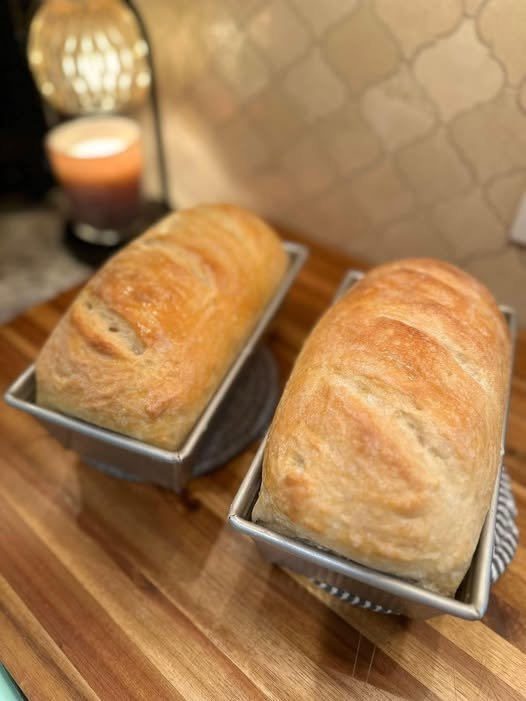

This sourdough sandwich bread made with yeast is soft, fluffy, slightly chewy, and perfect for everyday sandwiches, toast, grilled cheese, or breakfast. Adding a small amount of commercial yeast makes the recipe much more predictable than a traditional sourdough loaf while still giving you the wonderful flavor of sourdough starter.
Recipe Overview
- Prep Time: 25 minutes
- Rise Time: 2–3 hours
- Bake Time: 30–35 minutes
- Total Time: About 3½–4 hours
- Yield: 1 loaf
- Pan: 9 × 5-inch loaf pan
- Difficulty: Easy
Ingredients
- 1 cup (240 g) active sourdough starter
- ¾ cup (180 g) warm milk
- ¼ cup (60 g) warm water
- 2 tablespoons (28 g) unsalted butter, melted
- 1 tablespoon (21 g) honey or sugar
- 1 teaspoon instant yeast
- 1½ teaspoons salt
- 3 to 3½ cups (360–420 g) bread flour
For the Top
- 1 teaspoon melted butter, optional
Instructions
1. Prepare the Dough
Add the warm milk, warm water, sourdough starter, melted butter, honey, and instant yeast to a large mixing bowl.
Whisk everything together until the starter is mostly incorporated.
Add 3 cups (360 g) of bread flour and the salt. Mix with a wooden spoon or dough whisk until a shaggy dough forms.
Let the dough rest for about 10 minutes. This short rest gives the flour time to absorb the liquid and makes kneading easier.
2. Knead the Dough
Transfer the dough to a lightly floured work surface.
Knead by hand for approximately 8–10 minutes, adding additional flour a tablespoon at a time only if necessary.
The finished dough should be:
- Soft
- Smooth
- Slightly tacky
- Elastic
- Not excessively sticky
You can also use a stand mixer fitted with a dough hook. Mix on low speed for about 2 minutes, then knead on medium-low speed for 5–7 minutes.
Avoid adding too much flour. A slightly soft dough will give you a much lighter sandwich loaf.
3. First Rise
Place the dough in a lightly greased bowl.
Cover it with plastic wrap, a reusable cover, or a clean kitchen towel.
Let it rise in a warm place for approximately 1½–2 hours, or until it has noticeably increased in size.
Because this recipe contains commercial yeast, you don’t need to wait for the dough to double perfectly. Look for a dough that is puffy and roughly 1½ times its original size.
The exact rising time depends on the temperature of your kitchen.
4. Shape the Loaf
Lightly grease a 9 × 5-inch loaf pan.
Turn the risen dough onto a lightly floured surface and gently press it into a rectangle.
Fold the left side toward the center, then fold the right side over it. Roll the dough tightly from one short end to the other, creating a neat log.
Pinch the seam closed.
Place the dough seam-side down into the prepared loaf pan.
5. Second Rise
Cover the pan loosely and allow the dough to rise for 45–75 minutes.
The dough should become noticeably puffy and rise to around the top edge of the pan or slightly above it.
Don’t let it overproof. If the dough becomes extremely puffy and starts collapsing or developing a wrinkled surface, it has probably risen too far.
6. Bake
Preheat your oven to 375°F (190°C).
Place the loaf on the center rack.
Bake for approximately 30–35 minutes, or until the top is golden brown and the loaf sounds hollow when gently tapped.
For the most reliable result, the center of the bread should reach approximately 190–200°F (88–93°C).
If the top is browning too quickly, loosely cover it with aluminum foil during the final 10 minutes.
7. Finish the Bread
Remove the loaf from the pan immediately after baking.
Brush the top with a little melted butter if you want a softer, shinier crust.
Place the bread on a wire rack and allow it to cool completely before slicing.
This is important because cutting into very hot bread can make the inside seem gummy even when the loaf is fully baked.
Why Add Yeast to Sourdough Sandwich Bread?
Traditional sourdough bread relies entirely on wild yeast from the starter. While that creates wonderful flavor, fermentation can take many hours and depends heavily on starter strength and room temperature.
Adding a small amount of instant yeast gives you a little extra insurance.
You still get the flavor and tenderness from the sourdough starter, but the commercial yeast helps the loaf rise more consistently and quickly.
It’s an especially useful method when you want homemade sourdough bread but don’t want to wait overnight.
Tips for Soft Sandwich Bread
Use an Active Starter
Your starter doesn’t necessarily need to be at its absolute peak, but it should be active and healthy. A bubbly starter will contribute better flavor and fermentation.
Don’t Add Too Much Flour
This is one of the most common mistakes with homemade sandwich bread.
The dough should feel soft and slightly tacky rather than dry and stiff. Adding too much flour can produce a dense loaf.
Use Warm, Not Hot, Liquid
Milk and water should be comfortably warm, not hot. Extremely hot liquid can damage the yeast.
Knead Until Elastic
Proper gluten development helps the loaf hold its shape and creates a soft, fluffy crumb.
A simple test is to stretch a small piece of dough gently between your fingers. If it stretches into a thin membrane before tearing, the dough has developed good gluten.
Let the Bread Cool
As tempting as it is to slice immediately, wait until the bread has cooled completely. This allows the crumb to finish setting.
How to Store Sourdough Sandwich Bread
Once completely cool, store the loaf in an airtight bread bag or container at room temperature.
It should stay soft for approximately 3–4 days.
Avoid storing homemade bread in the refrigerator unless necessary because refrigeration can make bread stale faster.
For longer storage, slice the loaf and place it in a freezer-safe bag. Freeze for up to 3 months.
You can remove individual slices directly from the freezer and toast them whenever needed.
Can I Make This Bread With Whole Wheat Flour?
Yes. Replace up to 1 cup of the bread flour with whole wheat flour.
Keep in mind that whole wheat flour absorbs more liquid and produces a slightly denser loaf. If the dough feels dry, add a small amount of water, about 1 tablespoon at a time.
For the softest sandwich bread, I recommend keeping at least 75% of the flour as bread flour.
Can I Make It Without Milk?
Absolutely. Replace the milk with an equal amount of water.
The resulting loaf will still be delicious, although milk contributes extra tenderness and a slightly richer flavor.
Can I Use Active Dry Yeast?
Yes. Use approximately 1¼ teaspoons active dry yeast instead of 1 teaspoon instant yeast.
Mix the yeast with the warm milk and water and let it sit for about 5 minutes before adding the remaining ingredients.
Final Thoughts
This sourdough sandwich bread made with yeast is a great middle ground between traditional sourdough and classic yeast bread. The sourdough starter provides a subtle tang and depth of flavor, while the commercial yeast makes the rise faster and more reliable.
The finished loaf is soft enough for sandwiches, sturdy enough for toast, and delicious with butter, jam, eggs, cheese, or your favorite sandwich fillings.